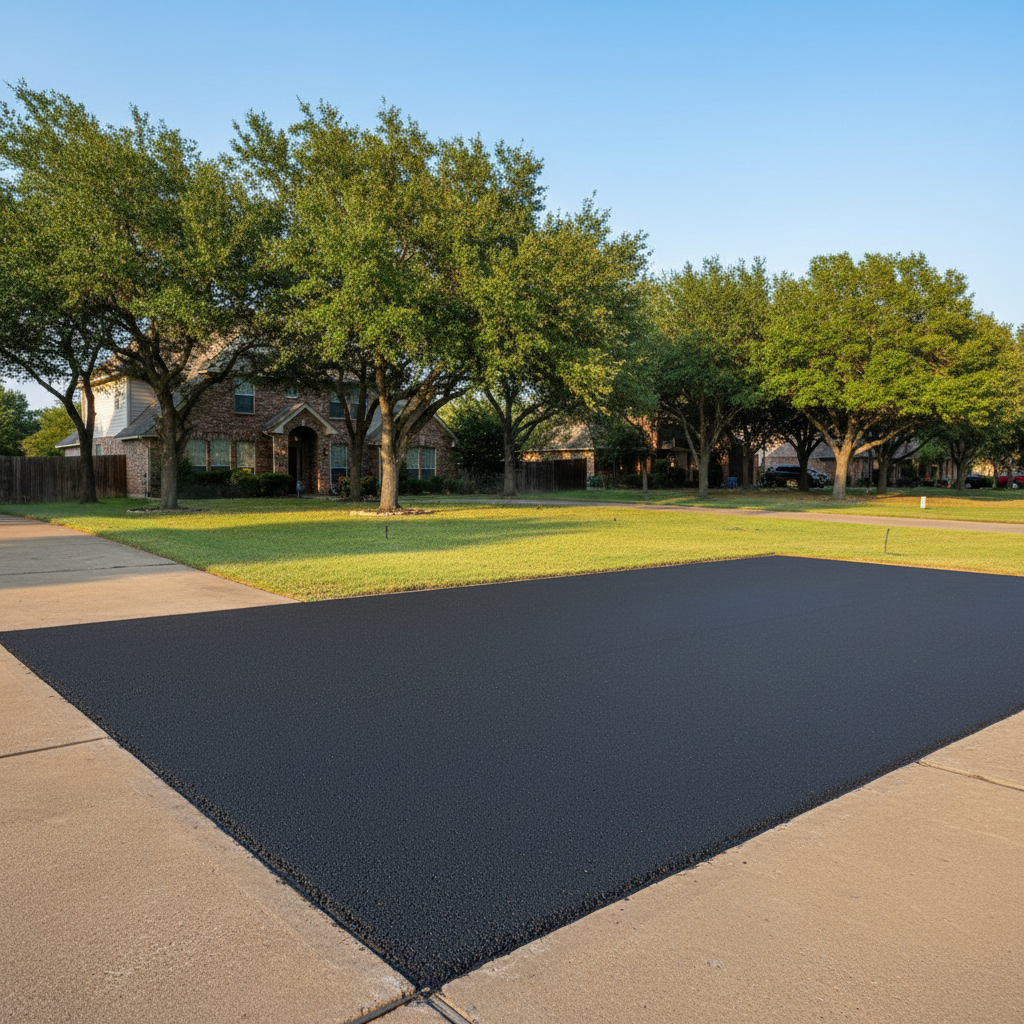
So, you got that asphalt patch done, maybe by us at Oasis Asphalt Inc, or another crew. Great. But that's not the end of the story. A patch, no matter how well it's done, isn't set-it-and-forget-it. Especially not here in Hutto, where our weather can be brutal on pavement. You want that patch to last, right? Of course you do. So let's talk about how to make that happen.
Extend the Life of Your Asphalt Patch
The biggest thing you can do to make a patch last is to keep it clean and sealed. Think of it like this: a patch is a repair, not a brand new surface. It's got seams, and those seams are vulnerable. Water is the enemy of asphalt, and our Texas sun doesn't help either.
First off, keep debris off it. Leaves, dirt, gravel – they all trap moisture and can break down the edges of your patch. A quick sweep or blowing it off regularly goes a long way. Secondly, and this is huge, consider sealcoating. A good sealcoat over your entire driveway or parking lot, including the patched areas, acts like sunscreen and a raincoat for your asphalt. It protects against UV rays and prevents water penetration, which is critical for those patch seams. I usually recommend sealcoating every 2-3 years, depending on traffic and how much sun it gets. If you've got a fresh patch, give it a few weeks to cure properly before you sealcoat over it.
Also, watch what you put on it. Heavy vehicles, sharp turns, or even just parking in the same spot day after day can stress a patch. If you can, vary where you park or drive, especially if it's a newer patch that's still settling.
Regular Maintenance: What You Should Be Doing
Regular maintenance for your patched asphalt isn't rocket science, but it does require a little attention. Here's what I tell folks:
- Clean it regularly: Like I said, sweep or blow off dirt, leaves, and any loose gravel. This prevents water from pooling and keeps the surface clear.
- Check for cracks: Even small hairline cracks can let water in. If you see new cracks forming around or within the patch, don't ignore them. You can use a good quality crack filler to seal these up yourself if they're small.
- Monitor drainage: Make sure water isn't sitting on or near the patch after it rains. Poor drainage will undermine the patch and the surrounding asphalt faster than anything else. If you notice puddling, that's a problem you need to address.
- Limit heavy loads: If you've got a patch on your residential driveway, try not to have heavy delivery trucks or RVs sitting on it for extended periods. For commercial lots, make sure heavy traffic areas are maintained even more diligently.
Our Hutto clay soil, for instance, can expand and contract a lot with moisture changes, and that movement underneath can stress any asphalt, patched or not. Good drainage is your best defense against that.
Warning Signs of Trouble
You're not a paving expert, and you don't need to be. But you can learn to spot the early warning signs that your patch might be failing or that bigger problems are brewing. Catching these early can save you a lot of money down the road.
- New cracks around the patch: This often means the original problem that caused the need for a patch (like a weak base) is still active, or the patch itself is starting to separate from the surrounding pavement.
- Potholes forming within the patch: If the patch itself is crumbling and forming new potholes, it wasn't done right, or the base underneath has failed.
- Raveling or loose aggregate: If you see small stones coming loose from the surface of the patch, it's a sign the binder is failing.
- Depressions or humps: If the patch starts to sink or heave, it's a clear sign of sub-base failure or poor compaction during the repair.
- Water pooling on the patch: Again, water is the enemy. If it's not draining properly, you've got a problem.
Don't wait until these issues turn into full-blown craters. A small crack or depression can become a major headache quickly, especially with our intense summer heat and sudden downpours.
When to Call a Professional
Look, you can do a lot of the basic maintenance yourself, and that's great. But there are times when you really need to bring in someone with the right equipment and expertise. That's where we come in.
You should call a professional like Oasis Asphalt Inc if:
- You see significant new cracks or potholes forming within the patch or around its edges.
- The patch is sinking, heaving, or showing signs of major structural failure.
- You've got drainage issues that you can't fix with simple cleaning.
- You're noticing widespread raveling or deterioration over a large area.
- You're unsure about the best course of action and want an honest assessment.
We're here in Hutto, and we know the local conditions. We can assess the situation, figure out why your patch might be failing, and recommend the best, most cost-effective solution. Sometimes it's another patch, sometimes it's a more extensive repair. The goal is always to get you a durable surface that lasts.
Don't let a small problem become a big, expensive one. A little attention to your asphalt patches now can save you a lot of grief later.