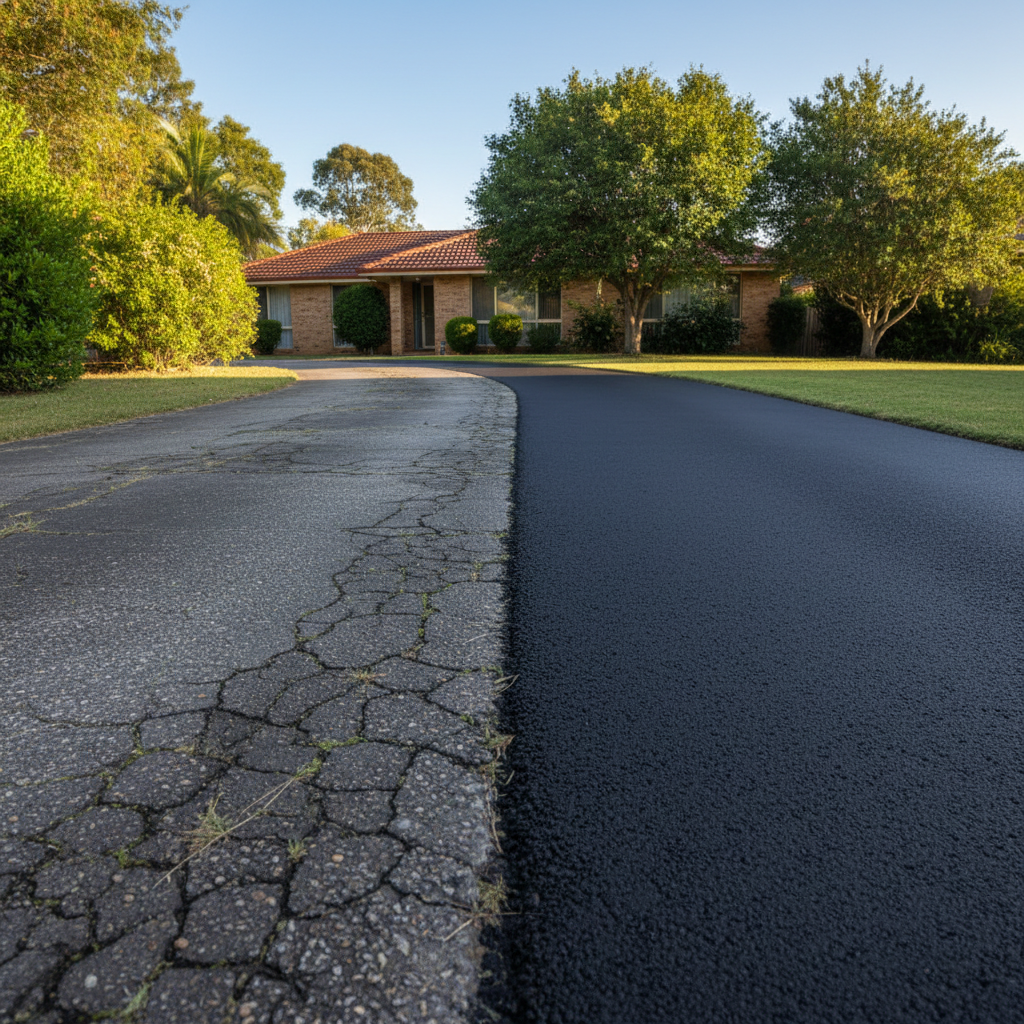
Alright, let's talk asphalt. You've got a cracked, worn-out driveway or private road here in Hutto, and you're wondering what the best way to fix it is. You've probably heard about two main options: an asphalt overlay or a full asphalt replacement. Both have their place, but knowing which one is right for your situation can save you a lot of headache and money down the line.
What's the Difference?
First off, let's clarify what we're even talking about. A full asphalt replacement is exactly what it sounds like. We come in, tear out all the old asphalt, sometimes even dig down into the sub-base if it's compromised, and then lay down an entirely new asphalt pavement from scratch. It's a complete do-over, from the ground up.
An asphalt overlay, on the other hand, is more like putting a fresh coat of paint on a wall, but with asphalt. We'll clean and prep your existing asphalt surface, fix any major cracks or potholes, and then lay a new layer of asphalt right on top of the old one. It's a resurfacing job, not a rebuild.
Cost: The Big One
Let's be honest, cost is usually the first thing on everyone's mind. And here, there's a pretty clear winner for initial outlay: the overlay. An asphalt overlay will almost always be significantly cheaper upfront than a full replacement. You're not paying for the extensive demolition, hauling away tons of old material, or potentially rebuilding the sub-base. You're just adding a new layer.
A full replacement, because it involves so much more labor, equipment, and material, is going to cost more. Sometimes, a lot more. But don't let that initial sticker shock completely rule it out, because there's more to the story than just the upfront price.
Durability & Lifespan
This is where the 'cheaper isn't always better' saying really comes into play. An overlay's lifespan is directly tied to the condition of the asphalt underneath. If the existing pavement has minor surface issues but a solid foundation, an overlay can give you another 8-15 years of good service. It's a great way to extend the life of a decent driveway that's just showing its age.
However, if your existing asphalt has deep, structural cracks, major potholes, or if the base underneath is failing – which is common with our expansive Hutto clay soils causing movement – an overlay is just putting a band-aid on a broken leg. Those underlying problems will eventually telegraph through the new overlay, and you'll be dealing with cracks and failures much sooner, sometimes in just a few years. You'll have wasted the money on the overlay.
A full replacement, when done right, addresses all those issues. We get down to the sub-base, make sure it's stable and properly compacted, and then build up the new pavement. This gives you a much longer lifespan, often 20-30 years or even more, with proper maintenance. You're getting a brand-new, robust structure.
Maintenance Needs
Both options benefit from regular maintenance like crack sealing and sealcoating. It's just smart to protect your investment. But an overlay, especially if the underlying pavement wasn't perfect, might show new cracks or issues sooner than a full replacement. You might find yourself needing to address those surface issues more frequently to prevent them from becoming bigger problems.
With a full replacement, assuming a good installation, your initial maintenance needs will be minimal beyond routine cleaning and scheduled sealcoating. It's a fresh start, so you're not inheriting existing problems that could pop up.
Appearance & Curb Appeal
When it comes to looks, both options can give you a beautiful, fresh black asphalt surface immediately after installation. An overlay effectively covers up all the old cracks, stains, and faded spots, making your property look much tidier and more professional.
A full replacement, of course, also gives you that pristine look, but with the added benefit of a completely uniform, consistent surface without any ghosting of old cracks. If you're looking for that absolute top-tier aesthetic and a perfectly smooth ride, a full replacement often delivers a slightly superior finish.
My Recommendation for Hutto Homeowners
So, which one should you choose? Here's my honest take, based on what Oasis Asphalt Inc. sees around town:
- Go with an Asphalt Overlay if:
Your existing asphalt has mostly surface-level cracks (spiderwebbing, minor longitudinal cracks), fading, or small potholes that haven't compromised the base. The overall structure feels solid when you drive on it, and you're looking for a cost-effective way to extend its life and improve its appearance for another decade or so. This is a great option for a driveway that's just getting old but isn't falling apart. - Opt for a Full Replacement if:
You've got extensive, deep, wide cracks, alligator cracking (looks like alligator skin), significant potholes, or areas where the pavement is sinking or heaving. If water is pooling consistently, or if you can feel the base moving when you drive over it, especially after heavy rains we get here, then an overlay is just throwing good money after bad. A full replacement will give you peace of mind, a much longer lifespan, and a truly stable surface that can handle our Texas weather and soil conditions.
Ultimately, the best way to know for sure is to have someone take a look. We can assess the condition of your current asphalt and give you an honest recommendation on whether an overlay will actually hold up or if you're better off investing in a full replacement. Don't guess; let's get it right the first time.